
Professional Salon Dog Bathing in 7 Steps – A Guide for Groomers
Reading time: 10 minutes
As a professional groomer, you know that bathing is far more than simple cleaning – it's the foundation for everything that follows. Properly prepared, clean, and conditioned coat is easier to cut, your scissor work looks better, and client satisfaction is guaranteed. In this article, I'll walk you through the 7 steps of professional salon bathing, complete with techniques and trade secrets that will elevate the quality of your service.
Why is Bathing Critical in the Grooming Process?
Bathing isn't just about hygiene – it's an integral part of salon work that determines the final result. A professionally executed bath:
- Removes dead coat, dander, and debris before scissoring
- Optimizes coat condition for cutting and hand-stripping
- Allows early detection of skin issues, parasites, and other problems
- Prepares the coat for optimal absorption of conditioners and treatments
- Creates a professional impression on the client from the start
As an experienced groomer, you know: time and attention invested in bathing pays off during scissor work. Working on matted, dirty, or poorly dried coat is time-consuming, and results never match those achieved with properly prepared dogs.
Step 1: Assessment and Preparation at the Bathing Station
Before the dog enters the tub, conduct a thorough assessment. This not only makes your work easier but also demonstrates professionalism to the client.
Coat and Skin Examination
Check the following:
- Matting severity: For heavily matted or pelted coats, consider pre-bath clipping or dematting
- Skin conditions: Signs of irritation, inflammation, or fungal infection – these affect shampoo selection
- Parasite infestation: Presence of fleas or ticks may require special treatment
- Coat type: Double coat, silky, wire, or curly coat each requires a different approach
Pre-brushing and Dematting
Golden rule: never bathe a matted dog! Wet mats tighten, felt up, and become nearly impossible to remove afterward. Use appropriate combs or brushes for coat type during prep:
- Slicker brush: For general dematting, double-coated breeds
- Wide-tooth metal comb: For silky, long coats
- Undercoat rake: For loosening undercoat on shedding breeds
- Dematting tool: For stubborn mats and tangles
Step 2: Wetting – The Technique for Thorough Saturation
Proper wetting is critical for shampoo effectiveness. Shampoo cannot work on superficially wet coat.
Water Temperature Setting
Professional grooming bathing tubs allow precise temperature control. Optimal water temperature is 37-38°C (98-100°F) – comfortable for the dog and promotes pore opening.
Saturation Technique
Use a high-pressure shower head or hand sprayer:
- Start at the rear end and work forward – this reduces dog stress
- Leave the head for last, and wet carefully, protecting eyes and ears
- For dense, double-coated breeds (husky, chow chow, Pomeranian), dedicate 5-10 minutes to thorough saturation
- Check for skin-level penetration: part the coat and verify the skin is wet
Pro tip: For water-repellent coats (golden retriever, Labrador), use diluted shampoo during the wetting phase – this breaks down the natural sebum layer.
Step 3: Shampooing – The Two-Phase Cleaning Protocol
In professional salons, double shampooing is standard practice. This isn't wasteful – it's a deliberate technique.
Shampoo Selection by Coat Type and Condition
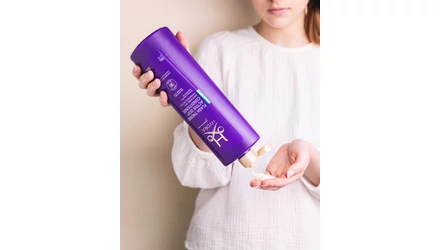
Selecting the right shampoo is a fundamental professional competency. The Hydra Pet Society product line offers a complete spectrum:
- Deep cleansing shampoo: For heavily soiled, greasy coats, first shampoo application
- Whitening shampoo: For white and light-colored dogs, against yellowing
- Texturizing shampoo: For wire and terrier-type coats, before hand-stripping
- Moisturizing shampoo: For dry, brittle coats
- Hypoallergenic shampoo: For sensitive, atopic skin
- Volumizing shampoo: For flat, lifeless coats
First Shampoo: Cleaning
The first shampoo removes surface dirt, dust, urine residue, and excess sebum:
- Use deep cleansing or general-purpose shampoo
- Dilute 1:4 or 1:8 for more economical and even distribution
- Massage through the entire body, paying special attention to groin, armpits, and sanitary areas
- This shampoo lathers quickly and rinses out quickly
Second Shampoo: Targeted Treatment
For the second shampoo, use the specialty shampoo appropriate for coat type and desired result:
- You'll need less product because the coat is already clean
- Let it sit for 3-5 minutes so active ingredients can work
- For Poodle and Bichon, this step is critical for achieving proper texture
Head and Face Cleaning
The head requires special attention:
- Use specialized facial cleanser or tearless shampoo
- Avoid getting product in eyes and ears – fold the ear flap or use cotton
- Clean beard areas thoroughly (Schnauzer, Westie) to remove food residue
Step 4: Conditioning – The Key to Professional Results
Many novice groomers skip this step citing time constraints – yet this is exactly what separates salon quality from home bathing.
Conditioner Types and Applications
Choose from Hydra conditioners and masks based on your goal:
- Rinse-out conditioner: For general maintenance, 2-3 minute contact time
- Deep conditioning mask (Hydra Intense Repair): For damaged, colored, or heavily stressed coats, 5-10 minute contact time
- Leave-in conditioner: For quick work, stays in the coat
- Detangling spray: For long-coated breeds, prevents future matting
Application Technique
- Apply conditioner after complete shampoo removal
- Concentrate on coat ends and drier areas (legs, tail)
- For long-coated breeds (Shih Tzu, Yorkshire Terrier, Maltese), comb through the conditioner-saturated coat
- Use deep conditioning masks for show dogs or special occasions
Pro tip: For Poodle and Bichon, over-conditioning can flatten the coat – use lightweight, volumizing formulas.
Step 5: Rinsing – Avoiding the Most Common Mistake
Inadequate rinsing is one of the most common mistakes in salons – with serious consequences: itching, flaking, skin irritation, dull coat.
Rules for Thorough Rinsing
- Time ratio: Spend at least twice as long rinsing as shampooing
- Direction: Work from top to bottom so shampoo doesn't run back onto already-rinsed areas
- Pressure: Use strong water pressure to penetrate to the skin
Critical Area Checks
These are the areas where shampoo residue most commonly remains:
- Armpits and groin
- Between toes
- Behind the ears
- Base of tail and sanitary area
- Neck folds (Bulldogs, Shar Pei)
Verification: Runoff water should be completely clear and foam-free. If you're unsure, rinse again!
Step 6: High-Velocity Drying – Professional Technique
Drying is where professional and amateur work truly diverges. Proper technique not only saves time but also protects coat condition.
Towel Pre-drying
Handle the dog with towels immediately after leaving the tub:
- Don't rub! Wet coat is vulnerable; rubbing causes tangles and breakage
- Use pressing, squeezing motions
- Microfiber towels absorb water more effectively
- Goal: stop dripping, not complete drying
High-Velocity Dryer (Blaster) Use
Professional grooming blasters and dryers work with strong, unheated airflow. Popular choices include:
- Shernbao SHD-2800P Tsunami – high performance, reliable
- Shernbao DHD-2400T Hurricane – dual motor, for professional salons
- Shernbao DHD-3000F Typhoon – premium category
Blasting technique:
- Direct airflow in the direction of coat growth
- Keep the nozzle 10-15 cm (4-6 inches) from the skin
- Work systematically: rear → body → chest → legs → head
- For double-coated breeds, the blaster "blows out" undercoat as well
Finish Drying with Stand or Handheld Dryer
Before scissoring, use a warm-air dryer for final styling:
- Poodle, Bichon: straighten the coat with comb or brush while drying
- Terrier types: avoid over-drying to preserve natural texture
- Show dogs: layered drying for maximum volume
Step 7: Finishing and Quality Control
The final steps of bathing ensure professional results and client satisfaction.
Final Brush-out
Thoroughly comb through the completely dried coat:
- Check for hidden moisture (armpits, behind ears, groin)
- Remove any remaining tangles
- Assess coat condition for scissoring
Finishing Product Application
For professional finishing, use finishing sprays or pet cologne:
- Shine spray: Extra brilliance for show dogs or photo sessions
- Anti-static spray: For silky coats, prevents static buildup
- Cologne: Long-lasting freshness – choose from the Hydra cologne range
- Volumizing mousse: For Poodle, Bichon styling
Ear and Eye Care
- Ears: Dry thoroughly, ear cleaning and hair removal if needed
- Eyes: Tear duct cleaning, stain treatment with specialized product
- Use professional eye and ear care products
Common Mistakes to Avoid
Even as an experienced groomer, it's worth periodically reviewing your routine. These are the most common mistakes:
- Bathing a matted dog: Wet mats felt up and can only be removed by clipping
- Insufficient saturation: Shampoo cannot work on dry skin
- Water too hot: Can cause skin irritation and discomfort
- Incomplete rinsing: Shampoo residue = itching, flaking, client complaints
- Semi-dry coat: Damp areas can develop mildew, cause skin problems
- Wrong shampoo choice: Products inappropriate for coat type compromise results
- Skipping conditioning: Coat becomes harder to manage, mats faster
Summary: The 7-Step Bathing Protocol
The foundation of professional salon work is consistent, high-quality bathing. Let's summarize:
- Assessment and preparation: Examination, dematting, pre-brushing
- Wetting: Thorough saturation with lukewarm water, down to the skin
- Shampooing: Two-phase cleaning – deep cleansing, then targeted shampoo
- Conditioning: Coat-type appropriate treatment
- Rinsing: Thorough, residue-free, all critical areas
- Drying: Blasting + finish drying appropriate to the style
- Finishing: Finishing products, ear-eye care, quality control
If you consistently apply this protocol, your work quality will rise, you'll be faster, and your clients will be more satisfied!
Recommended Professional Products:
- Hydra Professional Shampoos
- Hydra Conditioners
- Intensive Masks and Treatments
- Professional Blasters and Dryers
- Combs and Brushes
- Finishing Sprays and Colognes
- Grooming Bathing Tubs
Have questions or need professional advice? Contact us at hello@groomart.hu or call +36 30 269 2024! The GroomArt team offers professional solutions for professional groomers.


